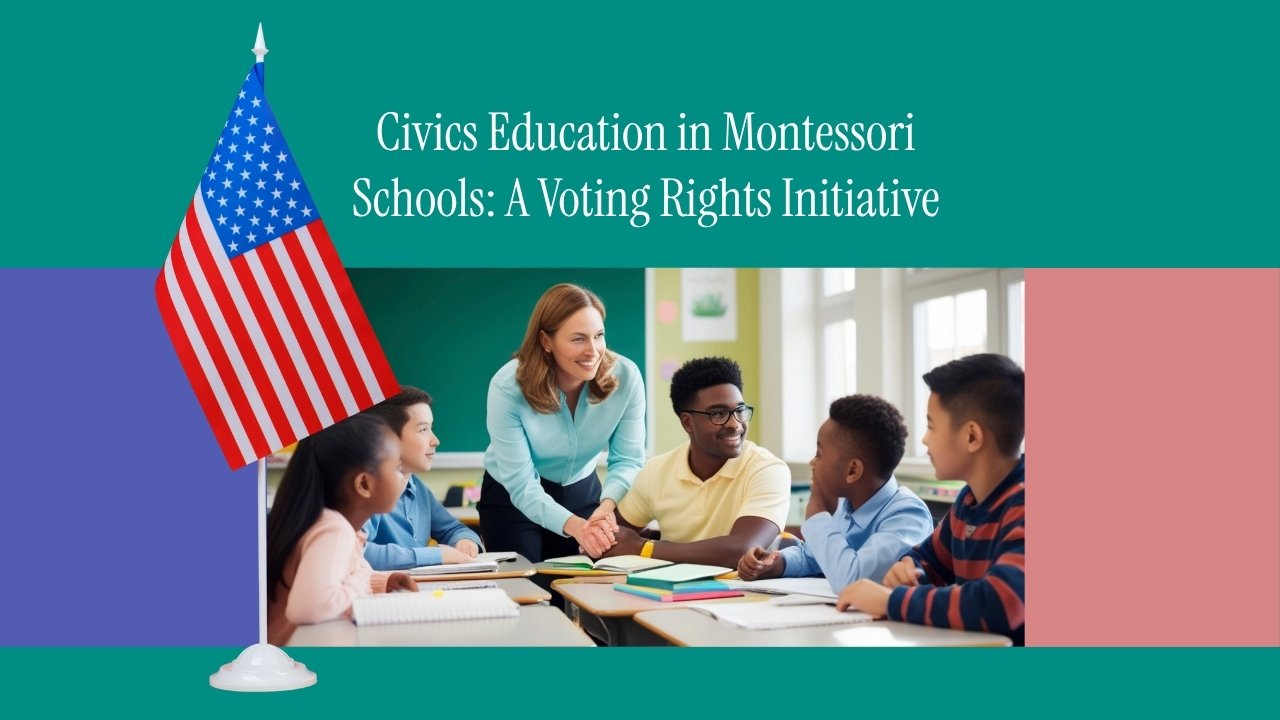
Civics Education in Montessori Schools:
A Voting Rights Initiative
Join Professor Paola Trabalzini and Kirsten Murphy for a session on "Voting Rights Initiative: Bridging Activism and Child Development". Human Rights and Social Justice (HRSJ) advisors Sheri Bishop, Catherine Massie, Laney Rogers, Erin Lopez-Brooks and Sha'londa Houston will share resources, followed by an open discussion for all community members.
SEPTEMBER 22 I 7:00 - 8:15 PM EST
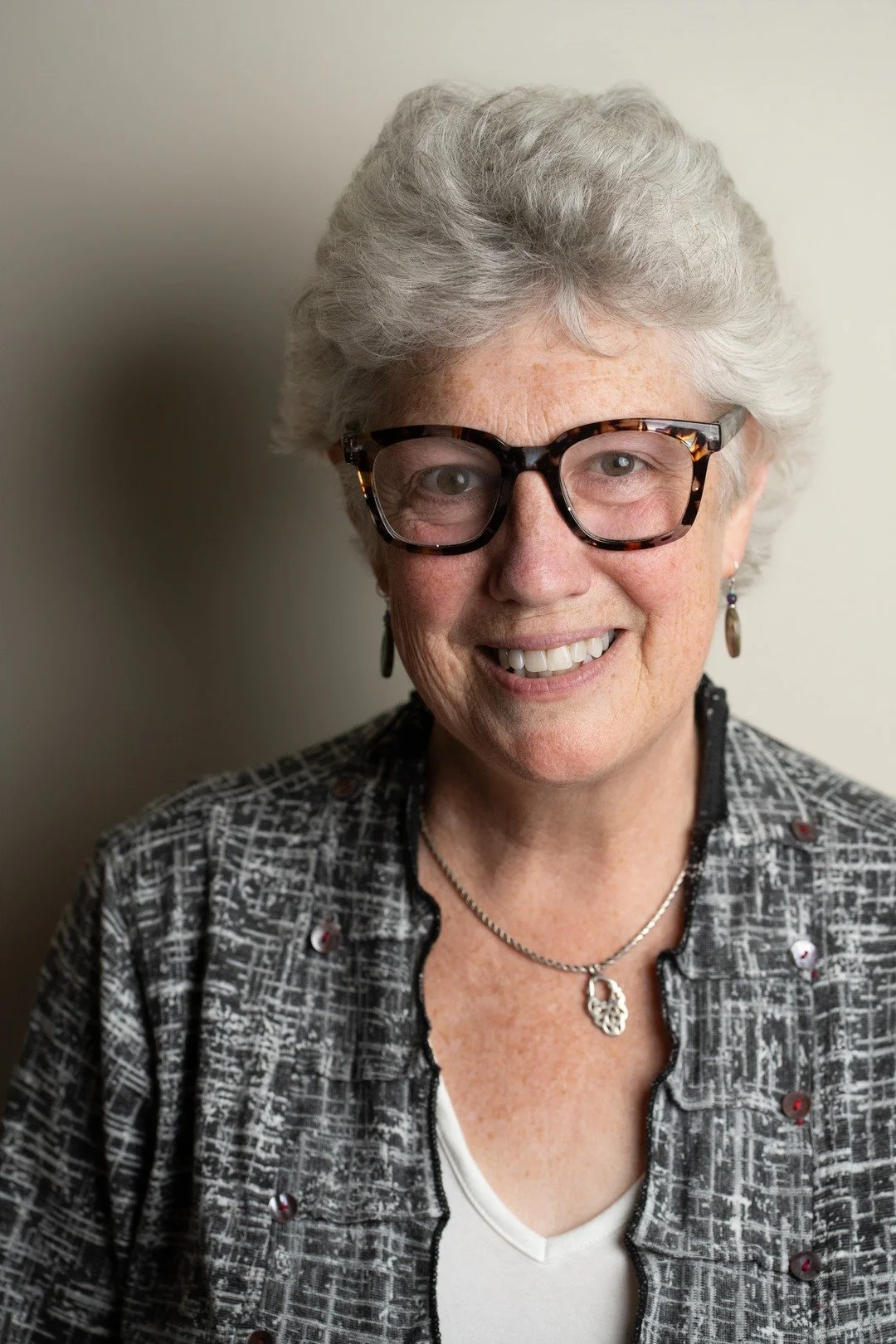
Meet your speakers
-
Catherine Massie, M.A.T. Elementary & Special Education, AMI Montessori Elementary Diploma, Montessori Therapy Diploma
Catherine studied Montessori Education in Bergamo, Italy, 2005-2006 and 2010-1011 at CISM; in Dallas, TX, in 2011 at AMI Educateurs Sans Frontieres (ESF); in Evanston, IL, in 2018 at AMI/NAMTA Adolescent Orientation; and in Munich, Germany, 2023-2025, earning her Montessori Therapy Diploma. Catherine is Co-Founder/Director of Montessori Medical Partnership for Inclusion (MMPI), since 2018, an international advocacy and resource organization to support Inclusion in Montessori education.
Catherine also works as a Montessori Special Educator providing individual academic interventions in reading, writing and mathematics. In Frederick, Maryland, she was a founder of two Montessori Public Charter Schools and has experience as Administrator at a private Montessori School. Catherine loves networking and collaborating internationally to advocate for more inclusive Montessori programs.
Catherine lives with her husband and 94-year-old mother in Woodsboro, MD. She enjoys running, traveling, nature and spending time with her 4 grown children and 6 lively grandchildren!
-
Bridging Activism and Child Development
How do we pair civic and social activism with Dr. Montessori’s indirect, developmental approach to education? Educators can design Montessori civics lessons that align directly with the intellectual, neuro-biological, and social characteristics of each plane of development. In the Montessori framework, academic subjects always serve the child’s holistic development—not the other way around. The time is right to teach children about every citizen’s right to vote.
Introducing the Voting Rights Initiative
When we look at voting rights today, our goal is to help children understand the power, privilege, and responsibility of every citizen's right to vote. This newly formed workgroup will meet virtually to exchange ideas and perspectives, explore resources, and create and share meaningful lessons and materials for our classrooms. Together we can cultivate the civic knowledge, habits, and dispositions that prepare children to participate thoughtfully and peacefully in democratic societies. Our inaugural meeting will be September 22, 2026 at 7:00-8:15pm EST, followed by at least one in October and November 2026.
-
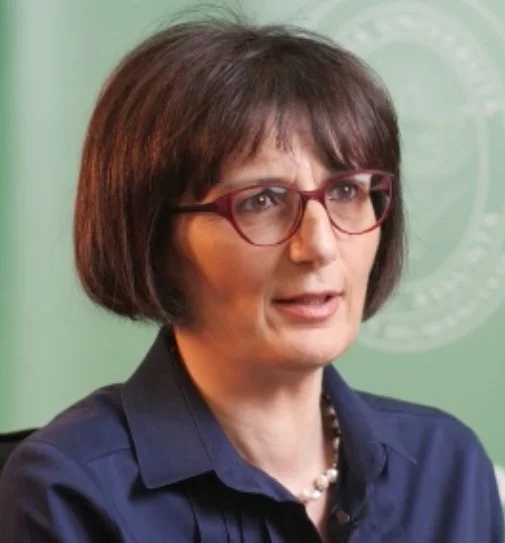
Professoressa Paola Trabalzini, Renowned Montessori Historian and Author of "Maria Montessori Through the Seasons of the 'Method' "[NAMTA Journal, Vol. 36, No. 2, Spring 2011].”
Paola Trabalzini is a Full Professor of History of Education at LUMSA University in Rome, where she has taught since 2014. A leading expert in Montessori education, she serves as the Chair and Coordinator of the Editorial Board for the Atlas Montessori, an open-access digital research portal, and has been a Board Member of the Opera Nazionale Montessori (ONM) since 2017. Between 2019 and 2023, she coordinated the LUMSA Research Unit for the national project "Maria Montessori between past and present," and from 2021 to 2024, she served as President of the Interclass Master's Degree Course in socio-educational management and Media Education at LUMSA.
Professor Trabalzini’s research focuses heavily on Montessorian pedagogy across historical-philological, anthropological, and didactic fields, as well as early childhood education, inclusion, and peace education. Among her notable academic contributions, she edited the definitive critical edition (Edizione Critica) analyzing the five historical editions of Maria Montessori's foundational text, The Montessori Method, and authored Maria Montessori through the Seasons of the "Method" (NAMTA Journal, 2011). She also serves on the scientific committees of several prominent national and international journals, including Vita dell’infanzia.
-
Professoressa Trabalzini will inspire Montessorians in this Voting Rights work through a recorded presentation on Maria Montessori, the Suffragette. Women's right to vote in Italy was one of Dr. Montessori's many Social Justice causes. Learn about how she was actively involved in establishing the right to vote for Italian women.
-
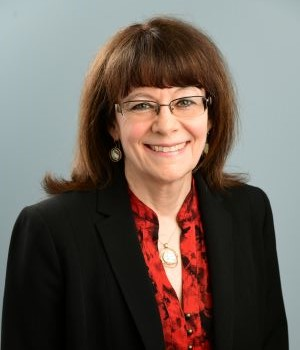
Kirsten Murphy, Leading Disability Advocate at the State and National level, currently President of the Board of Directors for the National Association of Councils on Developmental Disabilities (NACDD), Disability Rights Instructor for Leading Inclusive Montessori Schools (LIMS).
Kirsten Murphy serves as the Executive Director of the Vermont Developmental Disabilities Council (VTDDC) and holds the position of President of the Board of Directors for the National Association of Councils on Developmental Disabilities (NACDD). Additionally, she is a member of the Advisory Board for the Montessori Medical Partnership for Inclusion (MMPI).
Ms. Murphy began her career in non-profit management during the 1980s, advocating for unhoused youth in New York City. She later transitioned her professional focus to disability advocacy following her middle child’s diagnosis with autism spectrum disorder (ASD). Her leadership of the New Hampshire Committee on Autism Spectrum Disorders was instrumental in securing insurance coverage for essential ASD therapies. Ms. Murphy joined the VTDDC in 2013 as a Policy Analyst and was appointed Executive Director in 2016.
-
Ms. Murphy will connect the dots between teaching self-advocacy skills to students and Civil Rights Advocacy - such as advocacy for Voting Rights. Learning self-advocacy skills is a developmental process that enhances a child's ability to get their needs and rights met as independently as possible within their community. This is the same connection that Dr. Montessori recognized between how children are helped in their development and how they will become an agent for social justice standing up for themselves and others in society.